

Objective
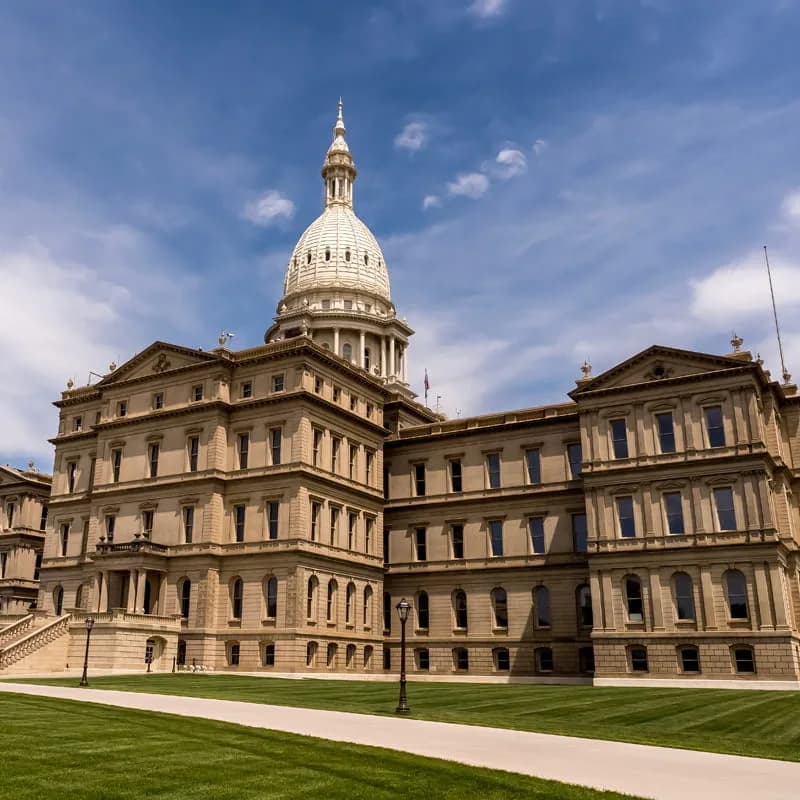
The Bureau of Energy Efficiency (BEE) has implemented the Energy Conservation Building Code (ECBC) for commercial buildings and complexes. It selected a few government buildings to showcase the implementation of energy efficiency improved programmers. These offices were directed to conduct a detailed energy audit to quantify the saving potential, translate the findings in financial terms and present it as a bankable project capable of securing a loan.
Scope
We were awarded a contract to conduct an energy audit at a Government Office Building complex in India. The scope covered:
- Review of the present electricity, fuel oil consumption
- Review and study of the distribution system, lighting, Diesel
- Generating (DG) sets, pumps etc.
- Survey of Motor loads
- Study of energy monitoring and accounting system
- Review of present maintenance practices, replacement policies and safety practices
- Cost benefit analysis of each conservation option
- Preparation of Detail Project Report (DPR)
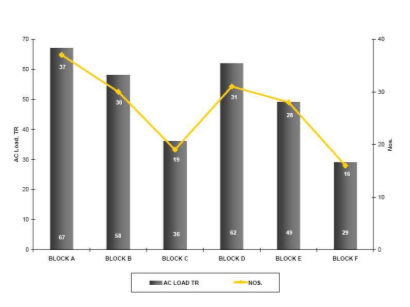
Based on the above we carried out an energy audit using our equipment, software, etc. The building is spread across a built-up area of 24,248 square meters and has six blocks. 11% of this built-up area is air conditioned. The average ambient temperature during summers is 45 C and in winters it is 12 C. On an average there are 13 ½ hours of day light per day in summer and 10 ½ hours per day in winters. The contracted electricity demand was 1000 kVA and they were having 3DG sets, each of 250 kVA.
A per year saving of over Rs 4,000,000 was expected by implementing our recommendations.
Findings
- Large imbalance amount phases.
- DG sets were used at low load factor.
- They were under the wrong tariff category.
- Their maximum demand overshot 9 times in the last year and this resulted in heavy penalties.
- There were no central air conditioning and they were operating Window and Split Air conditioners.
- Absence of false ceiling were contributing to increased energy consumption.
- Illumination level were not consistent in the built up areas.
- Institute was already using energy efficient lamps for their street lights.
- System power factor was relatively poor.
- Huge potential for energy saving on air conditioning existed.
Recommendations
- Use DG sets at higher load factor
- Migrate to different tariff category
- Install a maximum demand controller to avoid exceeding Maximum Demand (MD), reducing penalties therefore making huge savings
- Conduct a performance load management study
- Enhance contract demand
- Replace conventional desert coolers, ACs, ceiling fans with star rated equipment and conventional chokes in general lighting system with electronic ballset at T5 tubes
- Implementation of street light controllers in main building
Possible savings by implementing the recommendations
A per year saving of over Rs 400,0000 was expected if our recommendations are implemented. For implementations of some of the recommendations a capital investment was also required. However looking at the huge saving potential, this investment will pay back in reasonable time.